
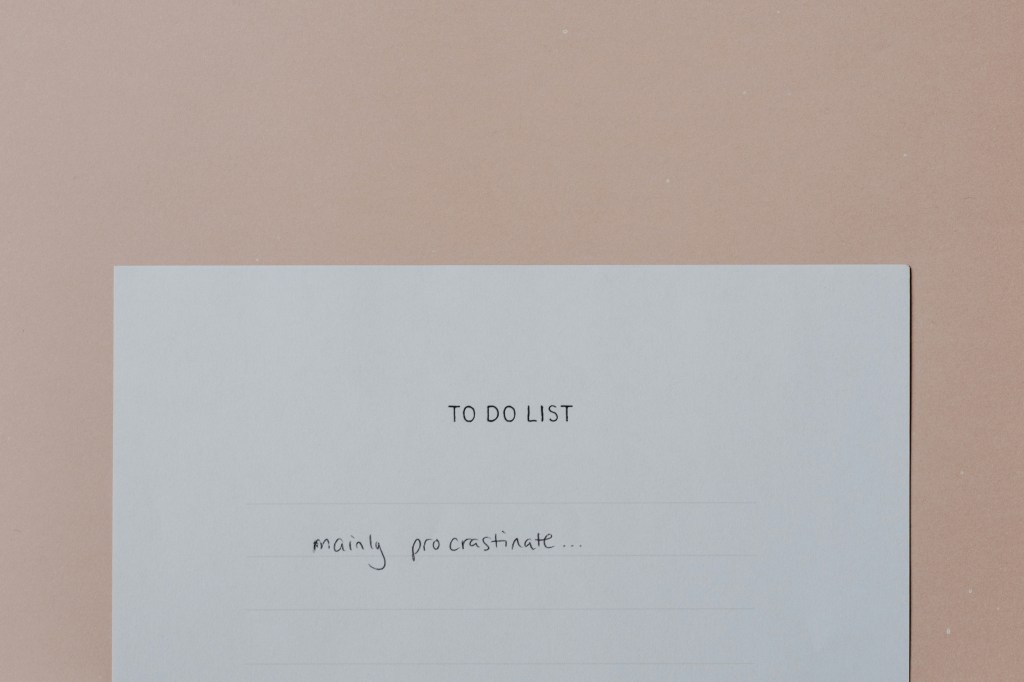
For today’s article, we will tackle a huge topic, which affects all of us every now and then. The internet is littered with tips and tricks to beat procrastination, and everyone seems to promote the one secret to beating it. But I believe we cannot change something so fundamentally human without understanding where it comes from. So, we will dive right in: What is procrastination, and why do we do it?
Procrastination is defined as “the voluntary delay of intended actions despite potential negative consequences” (Thomas, 2023; Wieber & Gollowitzer, 2010). And it affects all of us – did you know that estimates indicate that 80-95% of college students regularly procrastinate? It even chronically affects around 15-20% of all adults. And the numbers seem to be only growing. That’s why research has noted that it is crucial to understand that somehow, we humans are wired to go back to it. However, I am not only talking about starting an assignment the night before; some researchers have also noted a lack of retirement savings or presidential decisions as examples of procrastination. These are big things that can change our lives immensely!
So Why Do We Procrastinate?
Researchers have worked hard to understand what drives procrastination, and it turns out it’s a mix of personality traits, brain structures, and our natural tendency to prioritize short-term comfort over long-term rewards. One very prominent study by Steel (2007) found that procrastination is linked to various factors:
- Task Aversiveness: The more unpleasant or boring a task feels, the more likely we are to delay it. Think of tasks like filing taxes or cleaning out the garage — if a task feels like a chore, we naturally try to avoid it to escape discomfort.
- Impulsiveness: People who are more impulsive tend to struggle with procrastination because they’re more likely to seek immediate gratification. It’s hard to focus on a long-term goal when the pull of a quick dopamine hit from scrolling social media is so strong.
- Distractibility: The easier it is to get distracted, the harder it becomes to stay on task. In our digital world, full of notifications and endless entertainment, maintaining focus is a constant battle — and distractions make procrastination even more tempting.
- Self-Efficacy: If we doubt our ability to complete a task successfully, we’re more likely to procrastinate. When something feels too difficult or out of reach, avoiding it can feel safer than facing the possibility of failure.
- Organization: Poor organizational skills can lead to procrastination because it becomes harder to break tasks into manageable chunks or set realistic deadlines. Without a clear plan, tasks can feel chaotic and overwhelming, making it easier to put them off.
- Achievement Motivation: People with low achievement motivation — meaning they don’t feel a strong internal drive to accomplish goals — are more prone to procrastination. If completing a task doesn’t feel rewarding or meaningful, it’s harder to muster the energy to get started.
- Low Conscientiousness: Conscientiousness is a personality trait associated with self-discipline, responsibility, and carefulness. People who score lower in conscientiousness may struggle to stick to plans, resist temptations, and follow through on commitments, all of which contribute to chronic procrastination.
Essentially, the less appealing or more difficult a task seems, the less motivated we are to start it — and if we tend to get easily distracted or struggle with self-discipline, that only makes things worse.
Zhang et al. (2019) further expanded on this, explaining procrastination through two key perspectives:
- The Emotion-Regulation Perspective: Procrastination is a form of self-regulation failure, where we choose short-term mood repair over long-term goals. When faced with an unpleasant task, we might avoid it simply to feel better in the moment, even if it makes our future selves more stressed.
- Temporal Motivation Theory: Our motivation to act increases as deadlines approach, thanks to the time discounting effect. The closer a deadline looms, the more valuable completing the task feels, which is why many of us suddenly get a burst of energy the night before an important project is due.
Interestingly, procrastination may even be wired into our brains. Zhang’s research suggests that structural abnormalities and altered metabolism in the parahippocampal cortex and prefrontal cortex could contribute to procrastination, affecting our ability to engage in future thinking, memory, and emotional regulation. McClure et al. (2004) found that two distinct neural systems are involved in decision-making: the limbic system, which craves immediate rewards, and the lateral prefrontal cortex, which handles long-term decisions. The balance between these systems might explain why we sometimes choose instant gratification over long-term success.
How to Beat Procrastination for Good
The good news is that while procrastination might be deeply rooted in human nature, research has also uncovered plenty of effective strategies to help us beat it. Let’s explore some science-backed techniques:
- Increase Task Value: According to Steel’s (2007) research, raising the perceived value of a task reduces procrastination. One way to do this is by pairing unpleasant tasks with something enjoyable. For example, you could listen to your favourite music while cleaning the house or promise yourself a fancy dinner after finishing a big project. This ties the task to a short-term reward, making it more appealing.
- Break Tasks into Smaller Steps: Starting a massive project can feel overwhelming, so commit to just five minutes of work. You’re free to stop afterward, but you’ll often find that getting started was the hardest part. Over time, showing up regularly makes starting easier.
- Create Automatic Routines: Habits reduce cognitive load, so the more automatic your actions become, the less mental resistance you’ll face. For instance, always studying in the same place or consistently setting a bedtime can train your brain to associate those contexts with specific behaviours. This has been scientifically shown in a study with college students!
- Prime Your Environment: Stimulus control can guide behaviour. For example, keeping your phone out of reach or studying in a distraction-free zone reduces opportunities for delay.
- Boost Self-Efficacy: The more confident you feel in your ability to succeed, the less likely you are to procrastinate. If a task feels too easy or boring, making it slightly more challenging can engage your brain and increase motivation. Study groups are another great tactic, as they combine social interaction with accountability.
- Reward Yourself for Progress: Classical conditioning works! Reward yourself for completing small tasks, and your brain will start to associate productivity with pleasure. It could be as simple as taking a short break, having a tasty snack, or watching an episode of your favourite show.
In the end, beating procrastination isn’t about becoming a productivity machine overnight. It’s about understanding why we delay, being kind to ourselves, and experimenting with strategies until we find what works best. So next time you catch yourself putting something off, remember: you’re not lazy or broken — you’re just human. And with a little practice and patience, you can outsmart your procrastination and get back to what truly matters.
What are your ways to tackle procrastination? I would love to know!
Inspired by the information but unsure how to take action? Then our worksheet is for you. It is based on the practical information in this article, and you can use it weekly to better understand your own procrastination behaviour.
Sources
McClure, S. M., Laibson, D. I., Loewenstein, G., & Cohen, J. D. (2004). Separate neural systems value immediate and delayed monetary rewards. Science, 306(5695), 503–507. https://doi.org/10.1126/science.1100907
Steel, P. (2007). The nature of procrastination: A meta-analytic and theoretical review of quintessential self-regulatory failure. Psychological Bulletin, 133(1), 65–94. https://doi.org/10.1037/0033-2909.133.1.65
Zhang, S., Liu, P., & Feng, T. (2019). To do it now or later: The cognitive mechanisms and neural substrates underlying procrastination. Wiley Interdisciplinary Reviews Cognitive Science, 10(4). https://doi.org/10.1002/wcs.1492
Photo by Annie Spratt on Unsplash


 The Psychology of Mindful Living
Leave a comment